

Bringing a new puppy home goes best when most of the work happens before the puppy arrives: the supplies are bought, the house is puppy-proofed, and the first week is kept quiet. Below is the checklist we would give any family today, based on the years we spent sending puppies home, followed by a look at the first week.
Supplies checklist
Sleeping and containment
- A crate sized for the adult dog, with a divider. Most standard-size Goldendoodles need a large crate once grown. A divider lets you keep the space small while the puppy is little, so the crate stays a bed and not a bathroom. The puppy should be able to stand, turn around and lie down comfortably.
- Baby gates or an exercise pen, so you can close off a small, safe puppy area near where the family spends its time.
- Washable bedding for the crate. Expect it to be chewed and washed often at first.
Feeding
- Food bowl and water bowl. Stainless steel or ceramic is easy to keep clean.
- The same food the breeder was feeding. Ask for it by name before pick-up day, and don’t change diets during the first week. Our puppies were weaned straight onto raw food, so we suggested families have 3–5 lb of raw chicken on hand to cover the first few days. See our BARF Diet FAQ if your puppy is raw-fed.
- Small training treats. For a young puppy, one piece of their regular kibble or a tiny piece of food is a full reward. You don’t need a whole biscuit.
Walking and identification
- A lightweight collar or harness and a 4–6 ft leash. Puppies grow fast, so an adjustable collar is worth it.
- An ID tag with your phone number, worn from the first day.
- Microchip registration. If the puppy is already microchipped, update the registration with your contact details straight away. If not, ask your vet about chipping at the first visit.
Grooming
- A slicker brush and a metal comb. Goldendoodle coats mat easily, and short, gentle brushing sessions from the first week make grooming much easier later. See our Goldendoodle grooming guide.
- Nail clippers or a grinder, and a mild dog shampoo for the occasional bath.
Chewing and clean-up
- Several chew toys of different textures. Puppies explore with their mouths and teethe for months. Offering the right things to chew is much easier than protecting the wrong ones.
- An enzyme cleaner for accidents. Ordinary household cleaners can leave a scent that draws the puppy back to the same spot. Enzyme cleaners break down the odor.
Appointments to book now
- A first vet visit within the first few days. Bring the health and vaccination record the breeder gave you.
- A puppy class, if there is one near you that fits your schedule. There is a strong case for starting early (see below).
Puppy-proofing: get down to puppy height
Before bringing a puppy home, get down on your knees and look at each room from their level. You will find cords, shoe racks, dangling tablecloths, house plants and bits under the couch you never noticed.
A rolled-up rug is a small thing. Some things are genuinely dangerous, and the ASPCA Animal Poison Control Center lists these among the most common:
- Xylitol, a sweetener in sugar-free gum, mints, some peanut butters and baked goods. It can cause a sudden, dangerous drop in blood sugar and liver damage.
- Chocolate, especially dark and baking chocolate.
- Grapes and raisins, which can cause kidney damage.
- Onions, garlic and chives, which can damage red blood cells.
- Medications (human and pet), including anything left in a purse or on a nightstand.
- Toxic plants such as sago palm. The ASPCA keeps a searchable list of toxic and non-toxic plants, which is worth checking against what you have in the house and garden.
- Cleaning products, rodent bait, antifreeze and garage chemicals. Keep them up high or behind a latched door.
Save your vet’s number, the nearest emergency clinic’s number, and a pet poison helpline number in your phone before the puppy comes home.
Day one: keep it quiet
Coming into a new home is a big change. Your puppy has just left their mother and littermates, and everything smells, sounds and looks different. The first day should be calm, with the immediate family only. Hold the “come meet the puppy” party a couple of weeks later.
- Take the puppy to their potty spot as soon as you arrive, and praise them quietly when they go.
- Show them their small puppy area, crate, water and a couple of toys, then let them explore at their own pace.
- Let children sit on the floor and let the puppy come to them, instead of carrying the puppy around.
- Expect lots of sleep. Young puppies sleep much of the day, with short bursts of very active play in between.
The first nights and the crate
The first night is often the hardest, because it may be the first time the puppy has slept without littermates. A few things help:
- Put the crate in or right beside your bedroom for the first nights, so the puppy can hear and smell you and you can hear when they need to go out.
- Make the crate a good place. Feed meals in it, drop treats in it, and never use it as punishment.
- Plan for at least one night-time potty trip with a very young puppy. Keep it boring: out, potty, praise, straight back to bed. No playing.
- A puppy that has already been introduced to a crate will settle faster. We started crate training and both indoor and outdoor potty training before our puppies went home, because a puppy who already knows the routine has a much easier first week. Ask your breeder what your puppy is already used to, and carry on from there.
Potty training: a simple schedule
Puppies learn fastest when you prevent accidents instead of reacting to them. Take the puppy out:
- first thing in the morning and last thing at night
- after every nap
- within a few minutes of eating or drinking
- after a play session
- whenever they start sniffing and circling
A common rule of thumb (the American Kennel Club uses it) is that a puppy can hold their bladder for about their age in months plus one hour. That means about three hours at two months and about four at three months. Treat it as a maximum, not a target. Take them to the same spot each time, praise them the moment they finish, and clean accidents with an enzyme cleaner without making a fuss.
Feeding in the first week
Keep feeding exactly as the breeder did, including the same food and roughly the same times, for at least the first week. A move is stressful enough for a puppy’s stomach. If you want to change diets later, do it gradually. A little soft stool in the first few days is common. Call your vet if you see vomiting, diarrhea that doesn’t settle, blood, lethargy, or a puppy that won’t eat.
Socialization starts now, not after the last shot
There is a short window in a puppy’s life, roughly from 3 to 12–14 weeks of age, when new people, animals, sounds and places are accepted most easily. Puppies who miss good experiences during this period are more likely to be fearful later. By the time you bring a puppy home around eight weeks, part of that window has already passed. This is why we spent so much time with our litters on handling, household noises, car rides and gentle play with children.
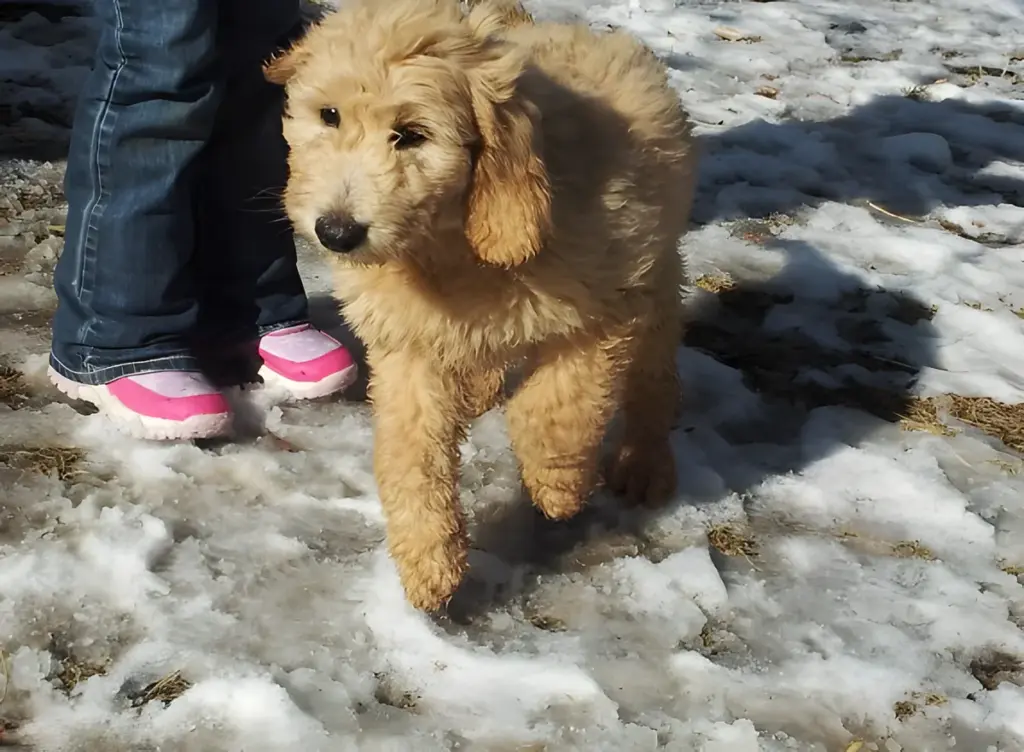
The American Veterinary Society of Animal Behavior (AVSAB) recommends that puppies start socializing, including well-run puppy classes, as early as 7–8 weeks. Before the first class the puppy should have had at least one set of vaccines at least 7 days earlier, plus a first deworming, and should stay current on their vaccines. Until the vaccine series is finished, stick to clean, controlled places and healthy, vaccinated dogs. Skip dog parks and busy pet-store floors where unknown dogs have been.
Good early experiences are short and positive:
- meeting calm adults and children of different ages, including people in hats, coats and boots
- car rides, the sound of the vacuum, doorbells, the TV
- different surfaces: grass, gravel, tile, stairs, snow
- short visits with a friend’s gentle, vaccinated adult dog
Handling and grooming from the first week
Get your puppy used to being handled all over while they are small and easy to reward. Touch their paws, look in their ears, lift their lips to see their teeth, and run a brush over their back for a few seconds. Give a treat each time. A Goldendoodle will be groomed every few weeks for the rest of their life, so a puppy who is relaxed on the grooming table is a gift to you and your groomer.

The first vet visit
Take the puppy to your vet in the first few days, even if they seem perfectly healthy. Many breeder health guarantees also ask for a vet check within a set number of days. Bring the breeder’s records. Your vet will examine the puppy, check for parasites, and set a vaccine schedule for where you live. Puppies usually get a series of vaccines a few weeks apart until about 16 weeks, but follow your vet’s plan. Ask about parasite prevention and spay/neuter timing too.
Training: start at home, then join a class
Training starts the day your puppy comes home: their name, coming when called, sit, and settling in the crate. Keep sessions to a few minutes and end on a success. Once the puppy has had their first vaccines, a good reward-based puppy class adds socialization, structure and a trainer’s eye. See our guide on choosing a trainer.
Is there a best time of year to bring a puppy home?
We thought about this a lot while we were breeding. Our advice was always the same: choose a quiet stretch of the calendar when someone can be home, and avoid the busiest week of the year.
Why we didn’t recommend a Christmas-morning puppy
The picture of a puppy under the tree is lovely, but the reality is often a puppy chewing wrapping paper and grandma’s slippers while everyone is distracted. The bigger risk is safety: a box of chocolates or a plate of leftovers left within reach can be dangerous. And a puppy’s first days should be quiet, with lots of family attention, not full of visitors, lights and noise.
If you want to give a puppy as a Christmas gift, give the anticipation instead. Wrap a leash, a collar or a photo, and bring the puppy home once the holidays are over. The waiting and planning can be part of the fun.
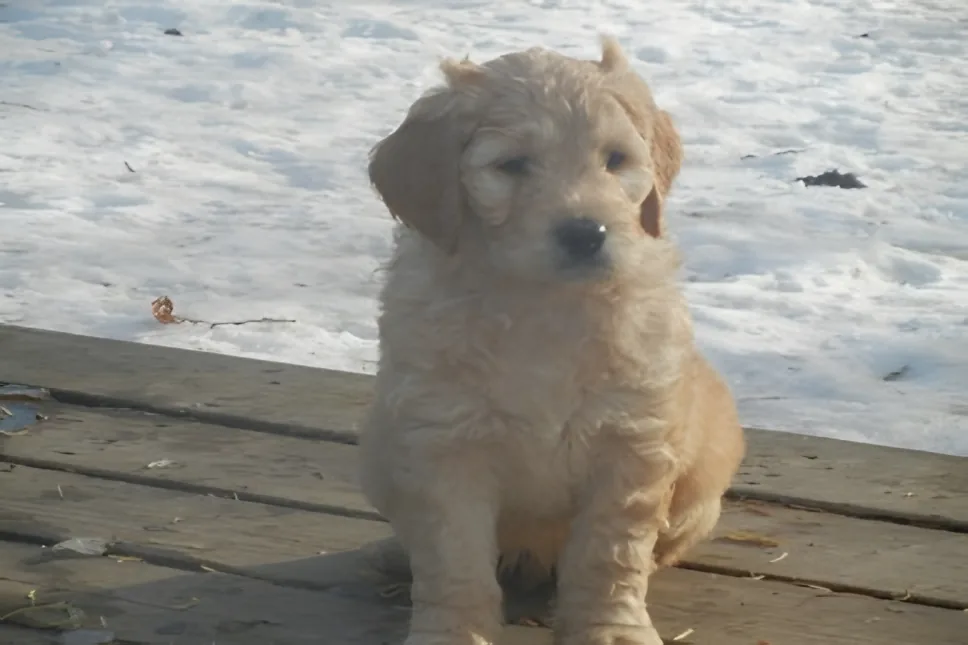
Why we loved February puppies
A winter puppy, especially in late winter, has some real advantages:
- Potty training is faster. When it’s cold and everything smells like snow, a puppy is very motivated to get the job done and get back inside. In spring there are a thousand new smells, in summer there are butterflies, and in fall there are leaves and squirrels. All of them distract.
- Short walks suit a young puppy. Puppies aren’t ready for long hikes, and in February you probably aren’t either.
- Life is quieter. Fewer holidays and trips mean more time at home for bonding and routine.
- Good timing for spring. Just as everyone is ready for parks, trails and road trips, the puppy is old enough to join in.
Whatever the season, the principle is the same. Bring a puppy home when your household can give them a calm, predictable few weeks.